Clerical Script and the Han Revolution in Writing
Clerical script (隸書) is the moment the Chinese writing system became recognisably modern. Understanding its rise clarifies almost every graph you read today.
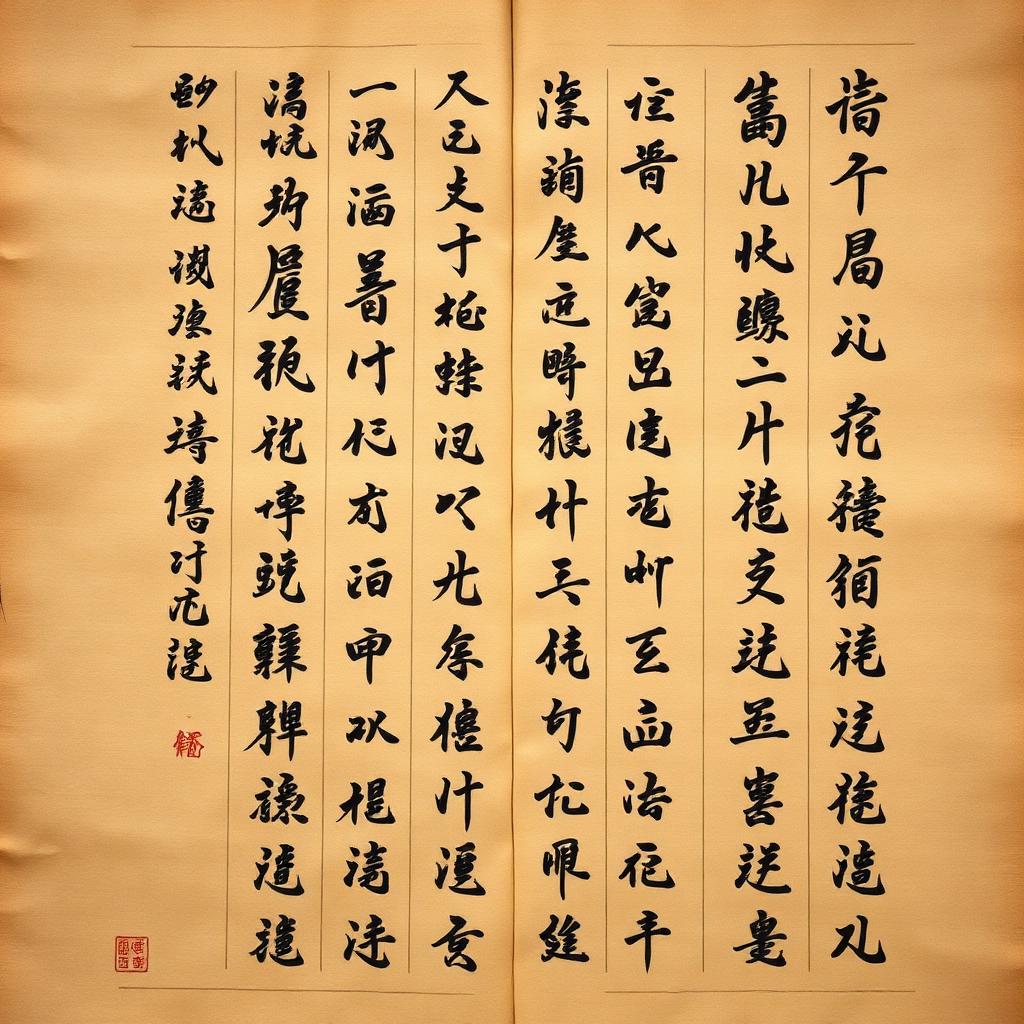
If small seal is the pivot of Chinese writing, clerical script (隸書, lìshū) is the moment the modern system emerges from the pivot. Every character you type on a modern keyboard is, in shape, a Han clerical form with its horizontal wave-flare tamed and its proportions regularised. Understanding the rise of clerical script is therefore not a specialist concern. It clarifies, in a single lesson, most of what looks arbitrary about modern Chinese.
The traditional account credits an obscure Qin clerk called Cheng Miao with inventing clerical script in prison, sometime during the reign of the First Emperor. He is said to have devised a faster, brush-friendly alternative to small seal because he had ten years of records to compile with no scribes to help. Modern paleography treats this story with the same scepticism it deserves. The Warring States period (5th–3rd centuries BCE) already produced abbreviated, cursive variants of the local seal scripts on bamboo slips, silk documents and lacquerware, and those variants — not a Qin clerk's prison invention — are the direct ancestors of Han clerical.
What the Qin unification did do was force a single administrative script into use across a suddenly vast empire. Small seal was the display form, cut on stone and cast in bronze. Clerical was the working form, brushed on wooden and bamboo slips at a speed no engraver could match. Bureaucracy expanded; clerical script expanded with it. By the time the Han dynasty was in full command in the second century BCE, clerical had become the empire's default hand for everything from legal contracts to imperial edicts.
The technological driver is the brush. A bronze stylus incising damp clay produces even, evenly weighted lines; a hair brush loaded with ink on absorbent paper or silk does not. It produces strokes that vary in width from the moment the tip touches the surface to the moment it lifts. Clerical script embraces that behaviour. Horizontal strokes begin with a downward tuck, thicken as they cross the character, and end with a raised flare — the characteristic 波磔 wave. Vertical strokes begin with a squared tip and end with a slight downward hook. The character as a whole becomes wider than it is tall, a proportion opposite to the seal script above it and to the regular script that will follow.
Structurally, clerical accomplishes two things that transform the writing system. First, it simplifies the internal composition of complex graphs. Where a small seal 馬 (horse) has four legs, a mane and a tail all individually drawn, the clerical form collapses them into four short vertical strokes at the bottom and a single wave at the top. The character is now writable in six or seven brush actions instead of a dozen. Second, it regularises the position and shape of common radicals. The water radical (氵), the heart radical (忄), the hand radical (扌) all acquire their modern three-stroke form in clerical script. Once these components stabilise, the phono-semantic engine of the Chinese script — meaning on the left, sound on the right — becomes visually obvious in a way it never was in the seal.
For the modern reader, this has a practical consequence. Almost every legible-at-a-glance component of a modern Chinese character has a direct clerical ancestor that looks nearly identical. If you can read a printed Han clerical stele — the Cao Quan Bei, the Yi Ying Bei, the Zhang Qian Bei are the standard training pieces — you can read modern Chinese with only minor adjustment. The reverse is also true: a modern reader who spends an hour with a good clerical alphabet chart can read most Han steles on the first try.
The politics of clerical are also worth pausing on. The word 隸 originally meant "bondservant" or "low-ranking clerk," and the script was so named because it was the hand of the administrative underclass, not the hand of the imperial court. That the underclass hand ended up displacing the court hand is one of the great cultural inversions of Han history. It happened because clerical was faster, cheaper, and legible to more people. It is a paleographic fact that has social implications: the standardisation of Chinese writing is not a top-down aesthetic achievement but a bottom-up bureaucratic one.
There are variants to be aware of. Early Han clerical, sometimes called 古隸 or "old clerical," still shows visible seal-script origins in its vertical proportion and its component shapes. Mature Han clerical, the form of the great steles, is the horizontal-with-wave-flare form most people picture. Late Han clerical begins to lose the wave-flare and shed weight; that stripped-down variant is one of the direct ancestors of the emerging regular script (楷書) of the Wei-Jin period.
The best exercise for a beginner is a short daily comparison drill. Pick a modern character, look up its small seal form in the Shuowen, then find a clerical rendering in one of the Han steles online. Note what changes and what does not. Do this for ten characters a day for a month and you will have absorbed the transition from ancient to modern Chinese script in a way no textbook chapter can convey. The rest of your reading life will thank you.