Reading Oracle Bones: A Beginner's Map to Jiaguwen
The Shang diviners left the earliest coherent Chinese writing on turtle plastrons and ox scapulae. Here is how to start reading them without a graduate degree.
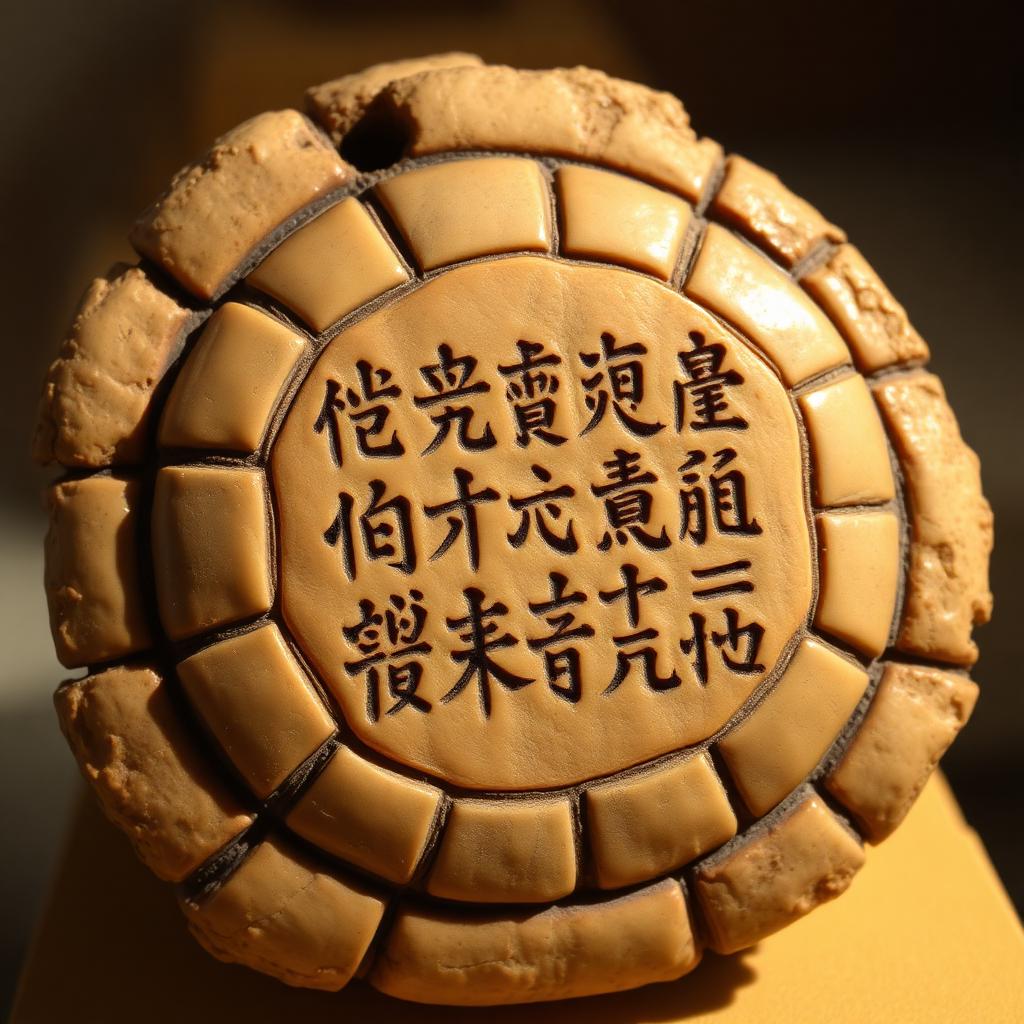
When Wang Yirong bought a batch of "dragon bones" from a Beijing apothecary in 1899, he was almost certainly buying medicine that had been ground down for two thousand years. The scratches on the surface were dismissed as decoration. Wang, a trained epigrapher, recognised them as writing. That single accident opened up the earliest continuous stratum of the Chinese script: jiaguwen, the oracle bone inscriptions of the late Shang dynasty (c. 1250–1046 BCE).
For a modern reader approaching oracle bones for the first time, the difficulty is not the strangeness of the graphs. It is the strangeness of the genre. These are not letters, not chronicles, not literary compositions. They are the by-products of state-sponsored pyromancy. A diviner charged a question — will the king's hunt succeed, will the harvest be abundant, will the ancestress Bi Geng accept the sacrifice — cracked the bone with a heated bronze rod, and read the resulting fissure. The charge, and often the verified outcome, was then incised beside the crack.
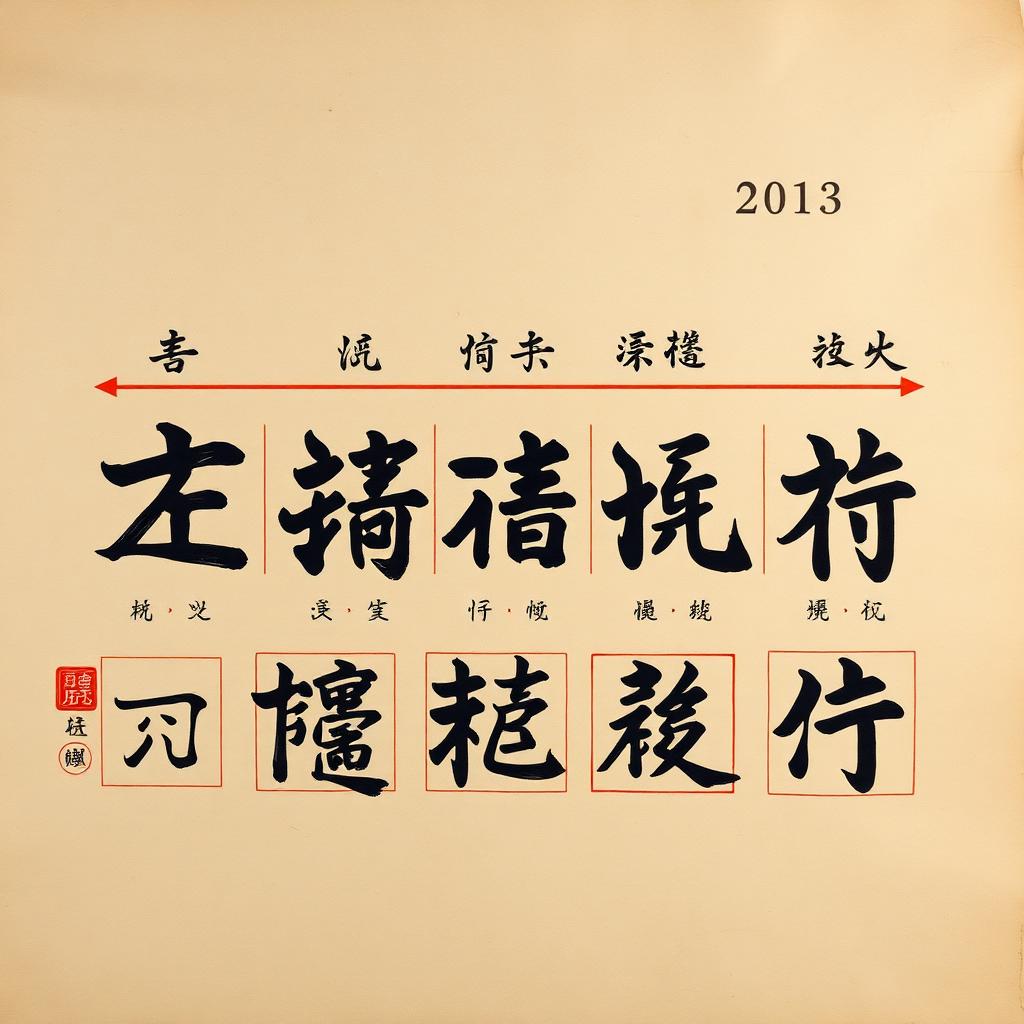
The physical layout matters. Most oracle bones are ox scapulae or the ventral halves of turtle plastrons. The bone was scraped, thinned, and drilled with rows of shallow pits on the reverse. Heat applied to a pit produced the auspicious 卜 shape on the obverse — the very graph from which the modern character for divination descends. Reading direction on the bones is remarkably unstable: columns can run left-to-right or right-to-left, top-down or occasionally in mirrored pairs across the central ridge. The first rule of jiaguwen reading is therefore to locate the crack, not the top of the page.
Once oriented, the second challenge is graph identification. Roughly 4,500 distinct graphs have been catalogued from the Anyang corpus, of which about 1,500 have secure modern equivalents. The rest remain unread, tentatively read, or read only in certain contexts. Standard reference works — Yu Xingwu's Jiaguwenzi Gulin, the Shirakawa Shizuka dictionary, and the newer Xin Jiaguwen Bian — arrange graphs by traditional radical, but jiaguwen radicals are frequently unstable across scribes. A single character for "sheep" can appear with two horns, three horns, or four, none of which is diagnostic.
For a beginner it is more productive to start with the closed vocabulary of the divination frame itself. Roughly a dozen graphs — the ganzhi day counters, the verbs 貞 (to divine), 卜 (to crack), 曰 (to say), the interrogatives 其 and 允, and the auspicious/inauspicious pair 吉 and 凶 — appear on nearly every inscription. Learn these, and you can already parse the skeleton of most short charges even if the substantive nouns remain opaque.
The third challenge is dating. Dong Zuobin's five-period scheme, published in 1933, remains the working model. Period I inscriptions from the reign of Wu Ding are large, carefully cut and thickly populated with royal ancestors; Period V inscriptions from Di Xin are compressed, formulaic and increasingly bureaucratic. A quick way to place an unknown bone in the periodisation is to check the diviner's name — the small group of court diviners in each reign is well documented — and the calligraphic style of the graph 貞.
None of this requires a lab or a subscription. High-resolution rubbings of the Anyang finds have been published in the Heji corpus since the 1970s, and a growing subset is available under open licences through Academia Sinica and the Chinese Text Project. Once you can identify a diviner, place a bone in a reign, and read the divination frame, you have already recovered more of the text than any pre-1899 reader could have hoped to. The rest is patient vocabulary work — one ancestor, one hunted animal, one weather graph at a time.
A final piece of advice: resist the urge to over-translate. Oracle bone inscriptions are laconic almost to the point of algebra. A typical charge reads, in full, "On the day jiazi, Que divined: it will rain." Adding subjects, articles, or English verbs of certainty inevitably smuggles in assumptions the Shang scribe did not make. The best modern editions render the text as tersely as the bone itself, and let the reader supply the ritual context. That restraint is what separates paleography from historical fiction.