How the 214 Kangxi Radicals Were Chosen — and Why It Matters
The 214-radical system that organises every modern Chinese dictionary is a specific, dateable editorial decision. Knowing how it was made helps you use dictionaries more efficiently.
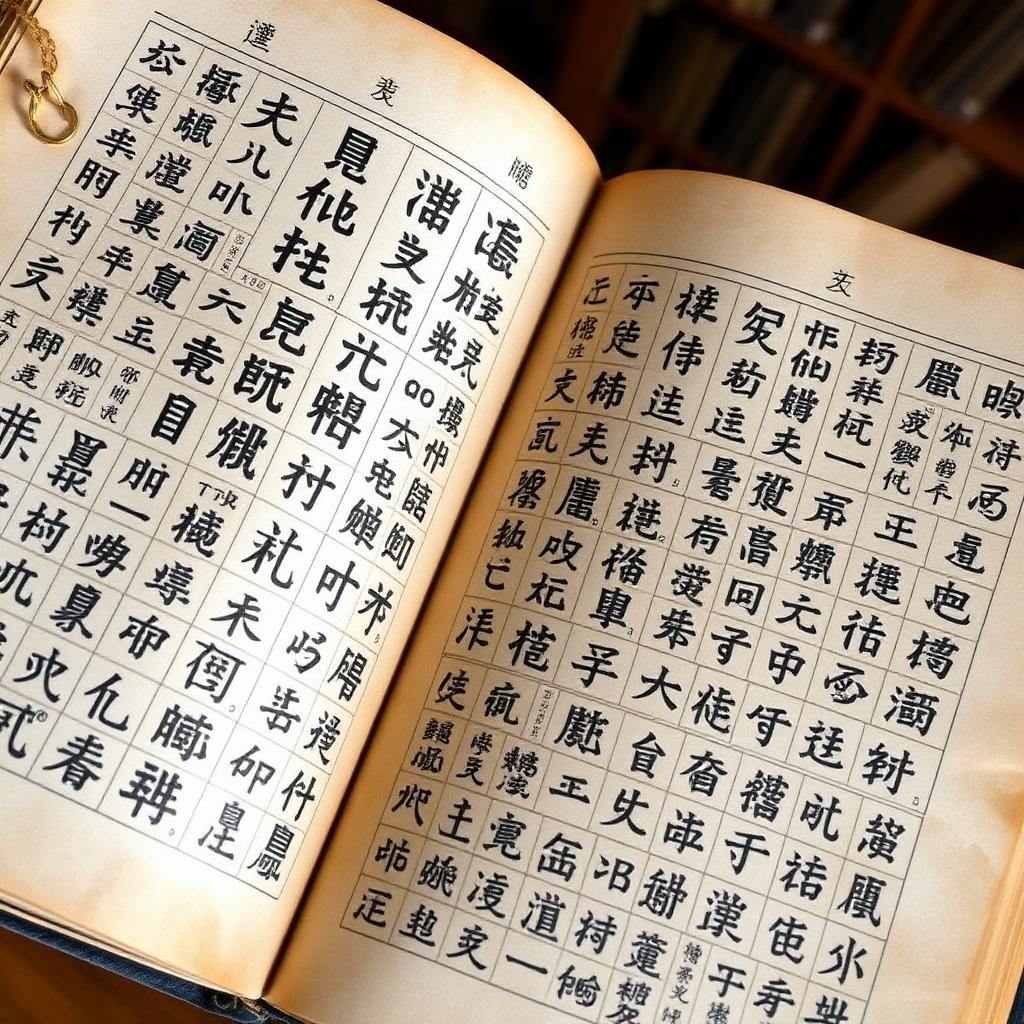
Every learner of Chinese eventually memorises, or half-memorises, the 214 Kangxi radicals — the semantic components under which every character in a traditional dictionary is filed. It is easy to treat this system as a natural feature of the writing system, as inevitable as the alphabet is for European languages. It is not. The 214-radical scheme is a specific, dateable editorial invention. Knowing when it was made, by whom, and against what alternatives, helps a modern reader use dictionaries more efficiently and less credulously.
The system is named for the Kangxi Dictionary (康熙字典), compiled between 1710 and 1716 under the patronage of the Kangxi emperor by a team of court scholars headed by Zhang Yushu and Chen Tingjing. The dictionary catalogues roughly 47,000 characters, filed by 214 semantic components (部首, bùshǒu, "section head"). Within each section, characters are further ordered by the number of residual strokes remaining after the radical is subtracted. This two-key ordering — radical, then residual strokes — is the search algorithm you still use today when you look up a character in a paper Chinese dictionary.
But the Kangxi editors did not invent the radical concept. They inherited it. The distant ancestor is Xu Shen's Shuowen Jiezi (c. 100 CE), which organised 9,353 headwords under 540 radicals. Xu Shen's radicals are theoretically motivated: each is a semantically fundamental component, and each headword under a radical is meant to derive its meaning from that component. This is elegant, but it produces some strange filing decisions — the character 春 (spring), for example, is filed under 艸 (grass) rather than under 日 (sun), because Xu Shen wanted to emphasise its plant-growth semantics.
Over the next fifteen centuries, various dictionaries reduced and reorganised Xu Shen's list. The most consequential intermediate step is the Ming-dynasty Zihui (字彙, 1615), compiled by Mei Yingzuo. The Zihui slashes the number of radicals to 214 by merging semantically similar components and dropping rare ones, and it is the Zihui, not the Kangxi Dictionary, that first uses the 214-radical list. The Zhengzitong (1671) preserves the same list. Kangxi's editors simply adopted the standard that was already dominant in their generation.
Why 214 rather than 540, or 300, or 100? The answer is essentially practical. A working dictionary needs a radical list small enough that a literate reader can memorise it, and large enough that the average number of characters under each radical is manageable. Xu Shen's 540 radicals leave several radicals with only a single character under them, which wastes shelf space; a reduced list of 60 or 80 radicals would leave the water radical containing thousands of entries, which slows lookup. The 214 figure sits at a rough optimum, which is why it has proved so durable.
The scheme has its problems. Some radicals are historically fictitious — that is, the modern character has been assigned to a component that is not its true etymological semantic. The character 相 (mutual) is filed under 目 (eye) because of its modern shape, even though its Shuowen etymology treats the tree component 木 as primary. Some radicals overlap: components that could plausibly be indexed under either of two radicals get assigned to one, and the reader must simply know which. And some radicals — 一 (one), 亠 (lid), 冂 (down box) — are so generic that they collect a heterogeneous group of unrelated graphs.
For a modern reader, three habits mitigate these problems. First, when a character resists lookup under its obvious radical, check the second-most-plausible one; a surprising number of characters are filed under a component that a naïve reader would not have chosen. Second, learn the Kangxi variant forms: a small set of radicals have alternate presentation shapes (水/氵, 心/忄, 手/扌, 犬/犭, 火/灬) which change position but not filing. Third, when a printed dictionary fails, use an electronic dictionary that supports component-based decomposition search. Modern tools such as Wenlin and Pleco will accept any component of a character as a lookup key, which effectively neutralises radical-choice ambiguity.
The 214-radical system also has scholarly rivals worth knowing about. The mainland PRC's Xinhua Zidian and Xiandai Hanyu Cidian use a reduced list of 189 radicals adjusted for simplified characters; Taiwan retains 214 in full. The Japanese Kanji dictionaries use a slightly modified 214 list, with some renumbering. The Unicode CJK ideograph tables use 214 as their canonical index, which is why the block is called "CJK Radicals Supplement" in the standard.
None of this is essential for reading pre-modern Chinese. But it is essential for using pre-modern Chinese dictionaries. Every reference tool a paleography student picks up — the Shuowen commentaries, the Guangyun rhyme dictionary, the Peiwen Yunfu, the Kangxi Dictionary itself — assumes a fluent working knowledge of the radical system in one of its historical forms. Learning to move between the 540-radical Shuowen system and the 214-radical Kangxi system is not vocabulary work. It is the difference between using the dictionaries and being defeated by them.