Rubbings as Reproduction: A Short History of the Chinese Squeeze
Long before photography, the Chinese ink rubbing (拓本) was the medium that let scholars share stone inscriptions across the empire. It still shapes how we see paleography today.
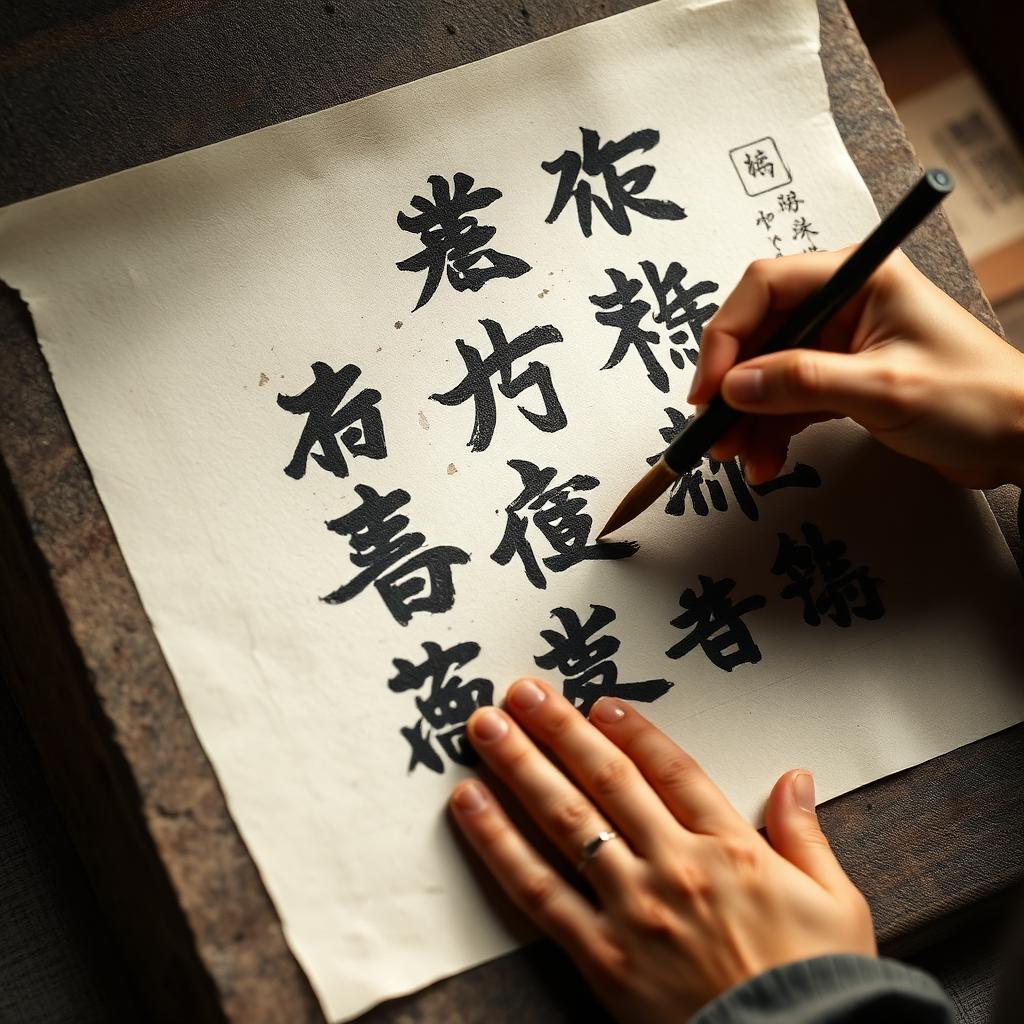
Every reader of Chinese paleography sooner or later encounters a rubbing — the black-and-white image, made by pressing damp paper onto a carved stone and tamping ink over the surface, that reproduces an inscription with millimetric fidelity. The technique is unglamorous, roughly a thousand years old, and remains the primary medium through which the corpus of early Chinese epigraphy is transmitted to the modern reader. Understanding how a rubbing is made, and what it does and does not preserve, is not a specialist skill. It is basic literacy for anyone reading a stele.
The technique in outline is disarmingly simple. A sheet of thin, absorbent xuan paper is laid over the carved surface of the stone (or bronze, or brick, or seal). The paper is damped with water and gently pressed into the depressions of the carving with a soft brush, so that it takes an exact physical impression of the surface. Once the paper has partly dried and is bonded to the stone by nothing but capillary tension, the taker uses a small silk-wrapped tampon (拓包, tuōbāo) loaded with ink to dab the raised surfaces. The depressed strokes of the inscription remain white; the surrounding stone comes out black. The dried sheet is peeled off and mounted. The whole process, done well, takes several hours and yields a reversed but exactly proportioned image of the original.
The oldest surviving rubbings are Tang-dynasty impressions of Han and pre-Han steles, some preserved among the Dunhuang manuscripts. Rubbing as an organised scholarly practice, however, is a Song-dynasty invention. The great Northern Song antiquarians — Ouyang Xiu, Zhao Mingcheng, Li Qingzhao, who together produced the Jinshi Lu (Records of Metal and Stone) between 1119 and 1132 — used rubbings as their working medium. They travelled, they collected, they exchanged rubbings in the post; they annotated the resulting sheets and bound them into portfolios. The scholarly discipline modern paleographers call 金石學 (jīnshíxué, "study of metal and stone") is essentially the Song discovery that rubbings are a reliable enough medium to make comparative epigraphy possible.
Because rubbings are reliable, they entered the aesthetic mainstream. From the late Ming onward, elite collectors treated fine rubbings as art objects in their own right, and a specialist market grew up: the pre-eminent taker of a rubbing, its paper stock, its ink and its date of production all affected its value. First-generation rubbings taken directly from a freshly excavated stele are called 初拓 (chūtà, "first impressions") and can command sums comparable to significant paintings. Later rubbings, taken from a weathered stele or from a re-carved replica, are called 後拓 (hòutà, "later impressions") and are systematically less valuable.
For the paleography student, three features of a rubbing repay attention. First, a rubbing preserves not just the text but the surface. Weathering, chisel marks, cracks, deliberate defacement — all show up. It is often possible to date a rubbing to within a decade by identifying which cracks are present or absent on the sheet, because the crack pattern on a famous stele is itself documented across successive rubbings. Second, a rubbing reverses the reading. Because the black surrounds the white strokes, a rubbing reads more like a printed book than the incised stone does; the eye follows the negative space. Some strokes that are hard to see on the physical stele — a shallow horizontal, an obscured turn — jump out on the rubbing. Third, a rubbing is not fully objective. The taker chooses how deeply to press the paper, how densely to tamp the ink, whether to include or exclude marginal defects. A single stele can yield rubbings that look meaningfully different.
The technique has its limits. Rubbings work only on surfaces with meaningful relief: incised stones, cast bronzes, embossed bricks. They do not work on painted or brush-written surfaces, which is why we have no rubbings of Warring States bamboo slips or Han silk manuscripts. Rubbings also destroy nothing but subtly wear the source: a stele that has been rubbed a thousand times loses definition at the edges of every stroke. The great Tang-dynasty steles at the Beilin Museum in Xi'an now sit under glass, and modern rubbings are made only under special permission — a policy that has caused the market for pre-modern rubbings of those same steles to appreciate steadily.
For the modern reader, the practical question is how to evaluate a rubbing. Three things to check. First, provenance: who took the rubbing, from what stele, in what year? A well-documented rubbing carries a colophon giving these details. Second, condition: is the rubbing clean, or are there ink smudges over the text? Are the edges of the paper intact? Third, comparison: does the rubbing agree with other published rubbings of the same stele? Digital repositories such as the Academia Sinica rubbings archive make this comparison much easier than it was even a decade ago.
Photography and 3D scanning have not displaced the rubbing. A high-resolution photograph flattens shadow; a 3D scan captures relief but is expensive to render and hard to reproduce on the page. The ink rubbing sits in a sweet spot: cheap to make, easy to publish, faithful to the surface, and readable on the same terms as printed text. A thousand years after the Song antiquarians standardised it, the technique is still the medium in which most Chinese epigraphy is first met by its modern readers. Learning to read a rubbing critically is therefore learning to read paleography itself.