Understanding the Ganzhi Calendar: How the Chinese Dated Everything
The sixty-cycle of stems and branches is the backbone of every pre-modern Chinese date. Learning how it works turns opaque chronologies into readable timelines.
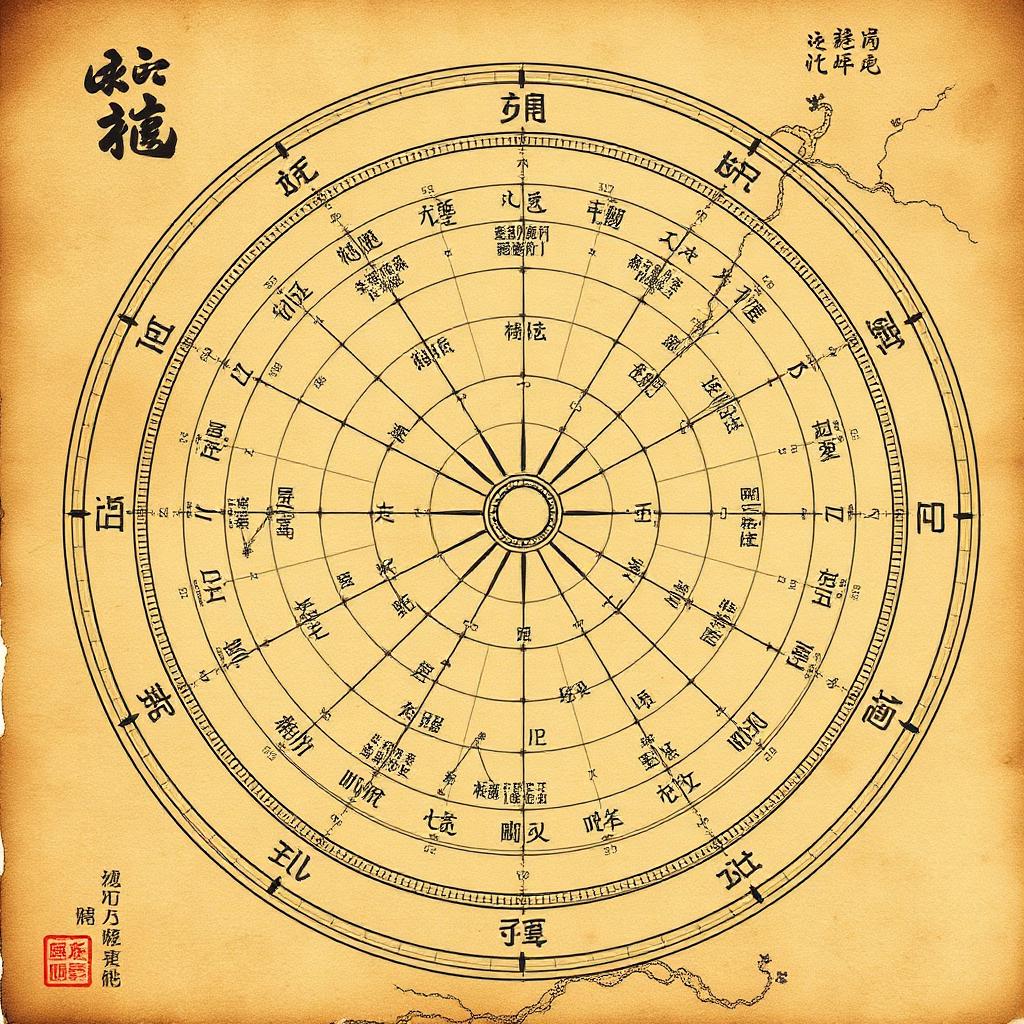
Open any pre-modern Chinese text and you will meet, sooner or later, a date like 乙丑年三月甲子日. To a modern reader this looks like a code. It is in fact a perfectly rational, and quite elegant, calendrical system that has been running continuously for more than three thousand years. Learning how it works is one of the highest-return investments a paleography student can make: it turns opaque strings of characters into readable timelines.
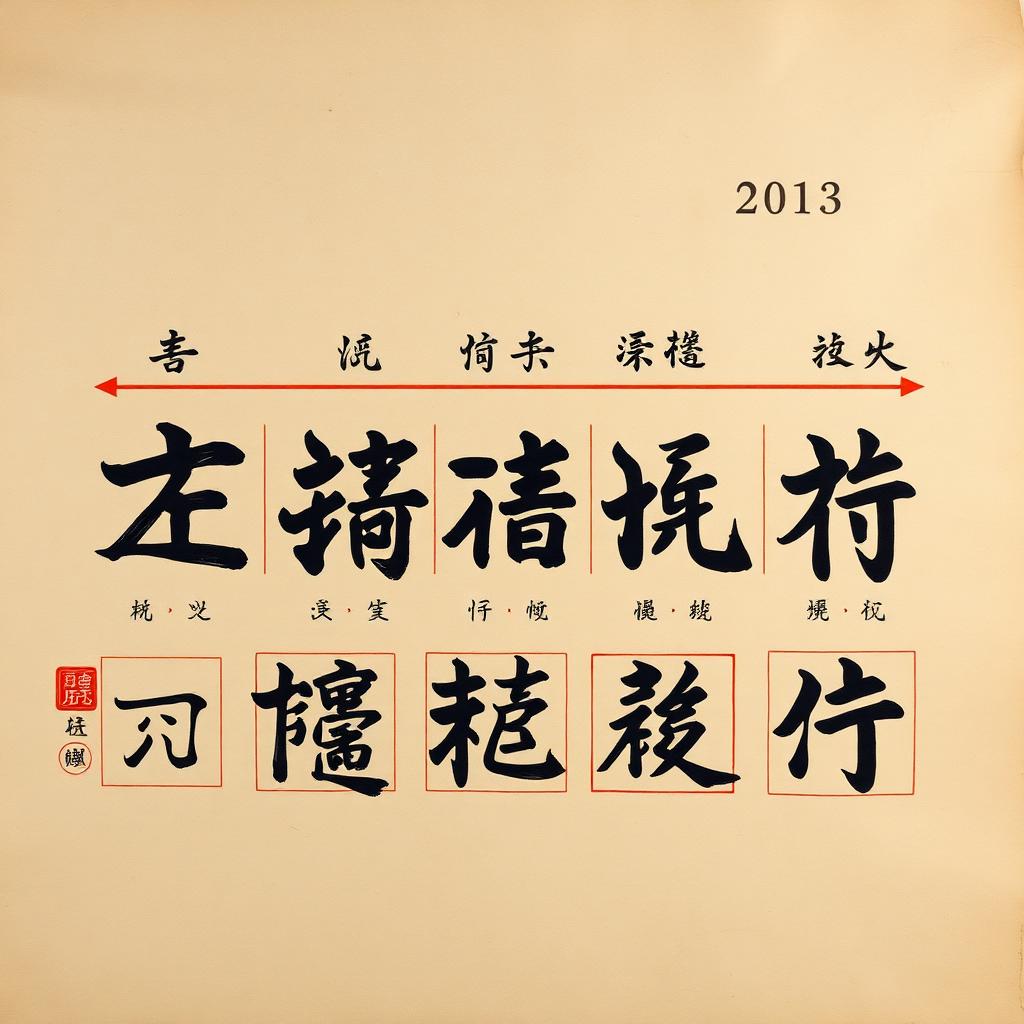
The system is built from two small tables. The ten Heavenly Stems (天干) are 甲乙丙丁戊己庚辛壬癸. The twelve Earthly Branches (地支) are 子丑寅卯辰巳午未申酉戌亥. Pair them in order — 甲子, 乙丑, 丙寅, and so on — and you get a cycle of sixty distinct combinations before you return to 甲子 again. This sixty-cycle, the ganzhi, is the atomic unit of Chinese chronology.
The ganzhi is used, independently, to number four different things: days, months, years and hours. In pre-Han texts, ganzhi day-counting is by far the most common. A Shang oracle bone charge dated 貞於甲子 is not naming a year; it is naming the day within an unbroken sixty-day cycle that was already running when the earliest surviving inscription was carved and is still running today. This is what makes ganzhi day-counting so valuable to modern historians: given any anchor date (say, the death of Confucius on a jiazi day in 479 BCE), we can project the cycle forwards and backwards without ambiguity.
Ganzhi year-counting is younger. It becomes standard in the Han dynasty and is used continuously from that point onward. A year named 甲子 recurs every sixty years. On its own, therefore, a ganzhi year is ambiguous — 甲子 could be 4 CE, 64 CE, 124 CE, and so on. To fix it, pre-modern texts combine the ganzhi year with a regnal era name (年號): 貞觀甲子, "the jiazi year of the Zhenguan era," is unambiguously 644 CE.
Ganzhi months are less common but appear in astronomical and ritual texts. Ganzhi hours divide the day into twelve two-hour periods, each named by an Earthly Branch: 子 covers 11pm–1am, 丑 covers 1–3am, and so on, with 午 straddling noon (which is why 中午 in modern Mandarin still means "midday"). This system is the basis of traditional Chinese medicine's diurnal cycle and of the twelve-animal zodiac, which maps a single animal onto each branch.
For a modern reader, the practical task is conversion. Three tools do most of the work. First, a ganzhi-to-Gregorian day converter — the ones published by Academia Sinica and by the Chinese Text Project are both reliable — will take a dynasty, an era name, an era year, a lunar month and a ganzhi day and return an ISO date. Second, a lunisolar calendar table will tell you when leap months (閏月) were inserted, which matters because a Chinese lunar year has either twelve or thirteen months. Third, a regnal-era table will let you convert between era names and Common Era years for any dynasty from the Han onward.
There are subtleties. The date at which the Chinese year begins has shifted over time. In the Zhou it began at the winter solstice; in the Qin, one month earlier; from the Han Wudi reform of 104 BCE onward, at the second new moon after the winter solstice, which is where it has stayed. Any pre-Han date computed with a Han-era year-boundary will be off by a month or more. Serious chronological work always specifies the calendar assumption.
There is also the problem of local calendars. During the Six Dynasties and the Five Dynasties, competing regimes issued their own regnal eras, sometimes overlapping, sometimes contradicting each other. A date recorded in a southern text and a northern text for what is objectively the same day can look completely different on the page. The standard reference here is Chen Yuan's Ershishi Shuorun Biao, which cross-tabulates every attested reign.
Once you have the basic machinery in place, the ganzhi system reveals itself as one of the most elegant calendrical inventions of the ancient world. It is compact, unambiguous within a sixty-day window, and requires no astronomical observation to run. It is also still in use: every traditional almanac published in Chinese today carries the ganzhi date alongside the Gregorian one. For a paleography student, learning to read those two lines fluently is the difference between skimming a text and situating it.