Warring States Bamboo Slips: When Chinese Manuscripts Were Written on Sticks
Before paper, Chinese texts were bundled columns of bamboo strips tied together with cord. Learning how they were physically made changes how you read what they say.
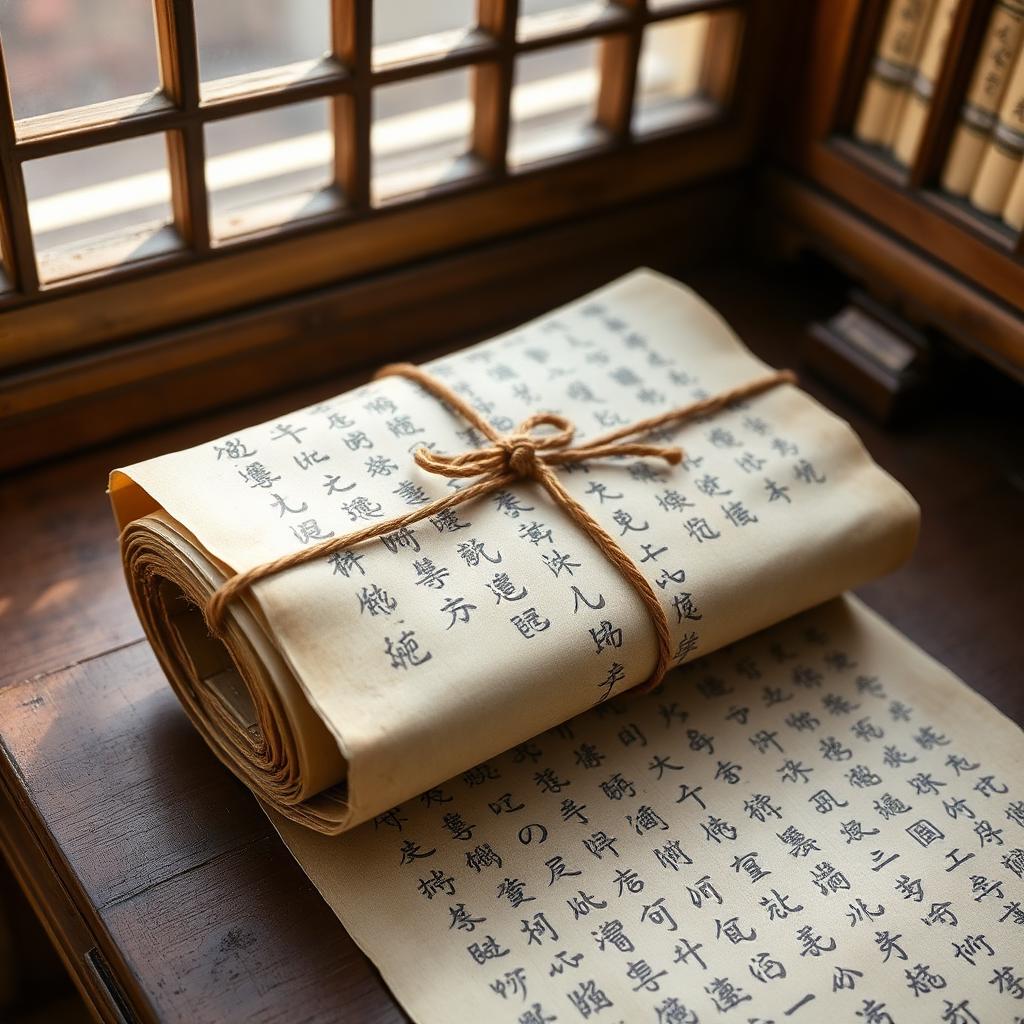
It is easy, when reading a modern edition of the Zhuangzi or the Analects, to forget that the text was originally written on sticks. Not on scrolls, not in codices, not on tablets — on thin, narrow strips of bamboo, cut, dried, planed and tied together into bundles. Every early Chinese classic we possess is a printed reconstitution of a Warring States manuscript technology that has almost nothing in common with the reading experience of a modern book. Understanding that technology is not a decorative concern. It changes how the texts read.
The physical object is a 簡 (jiǎn) — a bamboo slip. A standard slip from the Warring States and early Han is between 20 and 60 centimetres long, roughly 1 centimetre wide, and 1 to 2 millimetres thick. It is cut from a young bamboo culm, split lengthwise, planed smooth on the inner (concave) face, and dried over a fire to prevent warping and pest damage — a process the sources call 汗青 ("sweating the green"), from which the modern Chinese phrase for "the historical record" ultimately derives. On the prepared inner face, a scribe wrote a single vertical column of characters in ink. On the outer face, occasionally, he wrote a short label or a chapter title. The slips were then tied together into a bundle with two or three horizontal cords of hemp or silk, and rolled up for storage.
This physical format has immediate consequences for the text. First, a bamboo bundle is heavy. A copy of the pre-Han Guanzi, at roughly 130,000 characters, would have weighed several kilograms and taken up the volume of a small suitcase. Books were literally cumbersome, which is one reason pre-Han prose is so dense: the medium punished padding. Second, a bamboo bundle is fragile in a specific way: the cords rot before the slips do. When a Warring States tomb is excavated, the archaeologists routinely find slips lying scattered in the correct approximate area but in disturbed order. Reconstructing the original sequence — a task called 編聯 (biānlián) — is often the single hardest part of publishing an excavated manuscript.
The 1993 Guodian tomb, in what is now Hubei province, is a good illustration. The tomb contained roughly 730 slips carrying about 13,000 characters of philosophical text — a Warring States recension of the Daodejing plus several previously unknown works. When the slips were unearthed, the cords had disintegrated and the slips lay in overlapping heaps. The published edition, released in 1998, represents years of physical reconstruction: matching slip lengths, cord-mark positions, calligraphic hand and character content to determine which slip belongs beside which. Any modern reading of the Guodian Laozi has to reckon with the fact that the sequence itself is a modern editorial hypothesis.
A related consequence is that the individual chapter is a much stronger textual unit than the whole book. A Warring States manuscript often bundled together, on one string, texts of quite different provenance. The Shanghai Museum slips include, on a single bundle, cosmological, ritual and divinatory content that later editors would place in separate treatises. Whether "the Zhuangzi" as we have it was ever bundled together as a single work in the Warring States period is genuinely doubtful. The received table of contents is a Han and post-Han editorial project imposed on a much messier physical archive.
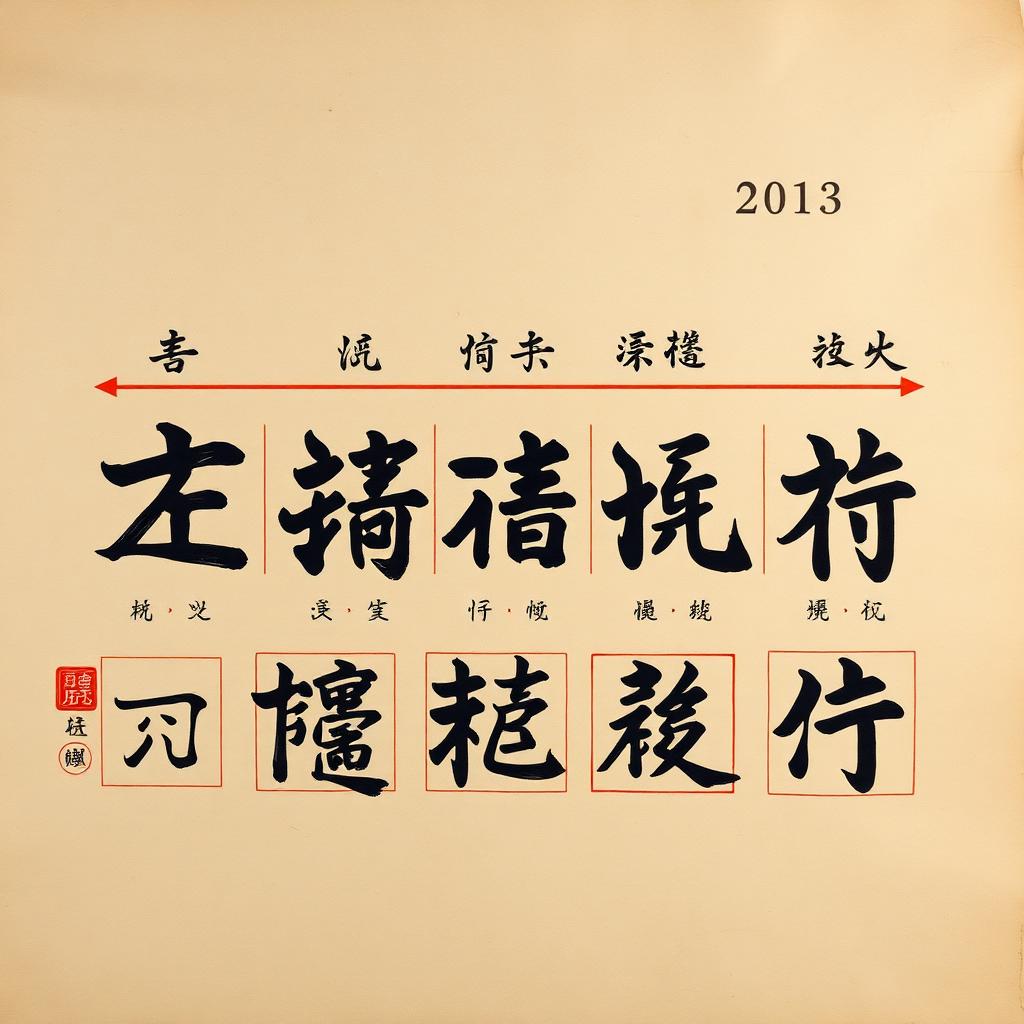
Materiality also shapes calligraphy. The scribe of a bamboo slip is writing on a narrow vertical strip. His characters are compressed horizontally and elongated vertically; his brush is a small one; his ink is a pine-soot suspension that dries almost immediately. The result is a distinct style of Warring States regional script — the Chu graphs of the Guodian and Shanghai Museum slips, the Qin graphs of the Shuihudi slips, the Qi graphs of the recently published Anhui University slips. These regional variants matter to paleography because they show the state of Chinese writing before Qin standardisation flattened it. Any modern chart of the pre-Qin script that lists a single form for each character is oversimplifying: there were several, one per major state, all in simultaneous use.
There are also wooden slips (木牘, mùdú), used mostly for administrative documents — legal cases, tax registers, medical prescriptions. Wooden slips are typically wider than bamboo, sometimes carrying two or three columns of text per surface, and they were often used for single-document communications rather than continuous books. The great Han-dynasty archives from Juyan, Dunhuang and Liye are made of wooden slips, and they preserve the bureaucratic prose of the frontier in extraordinary detail.
For a modern reader, the practical implication is a reading discipline. Whenever you sit down with an early Chinese text, ask yourself: what was the physical object this text originally sat on? How many slips? In what order? Which chapters were bundled together? The answers will not always be knowable, but the questions will prevent you from mistaking the modern printed edition for the ancient artefact. Bamboo slips are how Chinese thought was first stored and transmitted. Every modern edition is a translation from that medium into another, and every translation loses something. Knowing what has been lost is a large part of reading well.